The Sections Every GDD Needs (And Three It Doesn't)
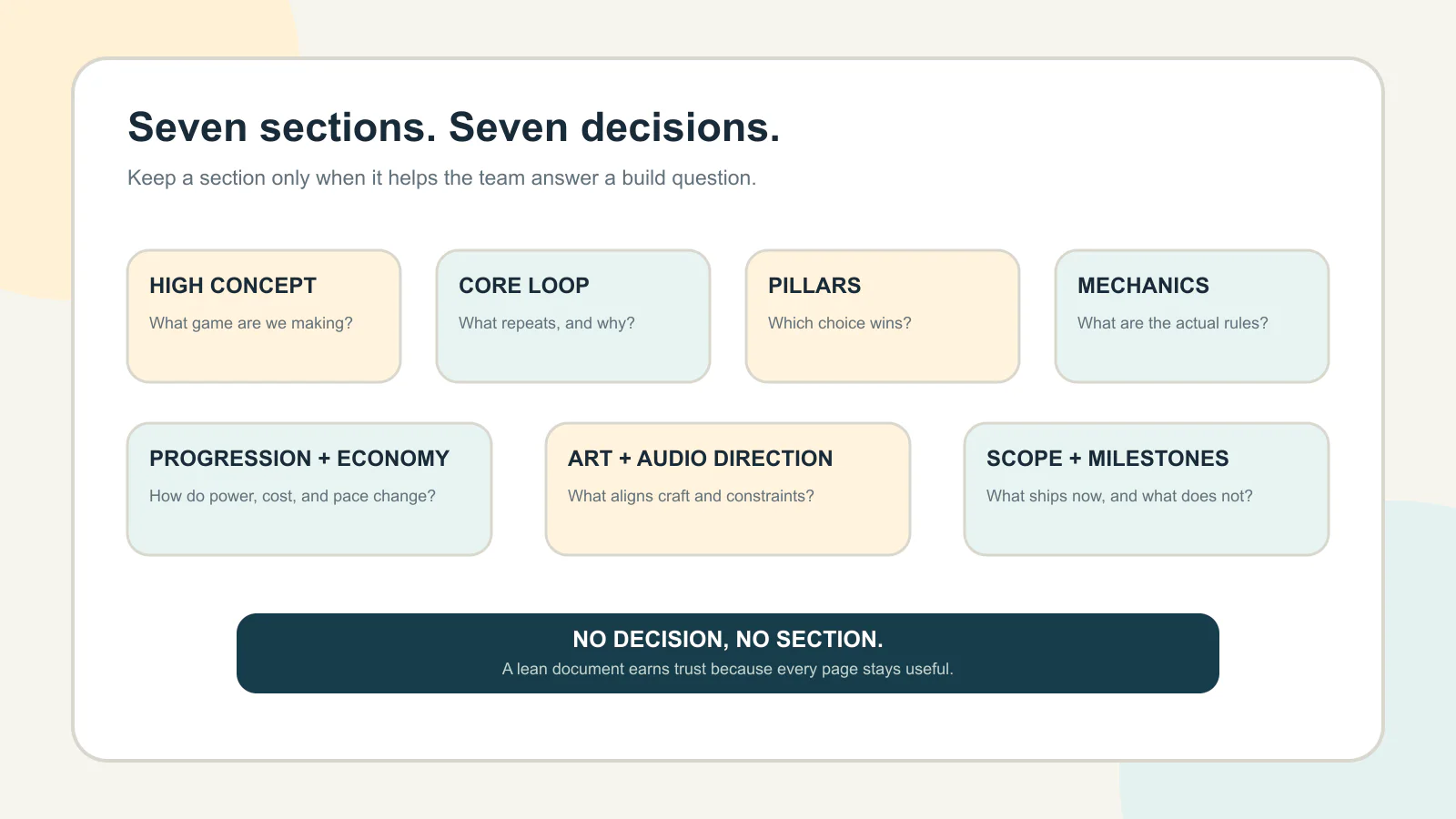
Image: Game Design Document
Open ten game design document templates and you will find ten different tables of contents. Some run to fifty headings before the first line of actual design. That is the fastest way to build a document nobody reads. The truth most guides bury is simple: a GDD is not measured by how much it contains, but by how many decisions it helps your team make. A tight document that answers real questions beats a 200-page bible that gathers dust in a shared drive.
This piece separates the sections that consistently pull their weight from the ones that quietly kill momentum. If you are starting a doc this week, use it as a filter.
The Seven Sections That Earn Their Place
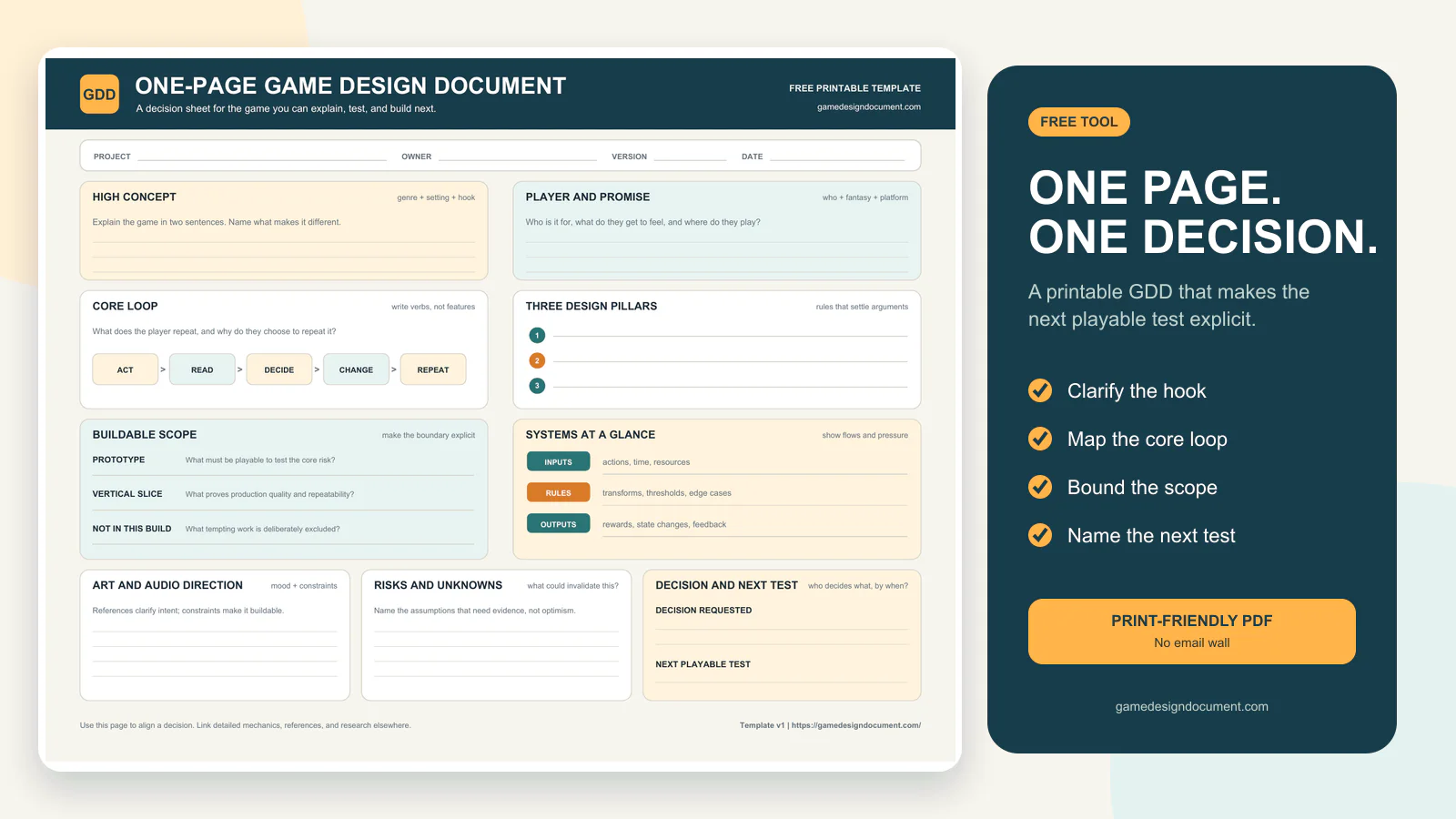
These are the headings that repeatedly show up in GDDs teams actually revisit. Each one exists because someone needs to make a call and needs the answer written down.
- High Concept. One or two sentences naming the genre, the fantasy, and the hook. If you cannot compress the game to a paragraph, the rest of the doc will wander.
- Core Loop. The moment-to-moment actions the player repeats. What do they do in the first thirty seconds, and why do they do it again?
- Pillars. Three to five design values that settle arguments. When two features conflict, the pillars decide which one wins.
- Mechanics and Systems. The rules, verbs, and interactions. This is the working heart of the document and usually the largest section.
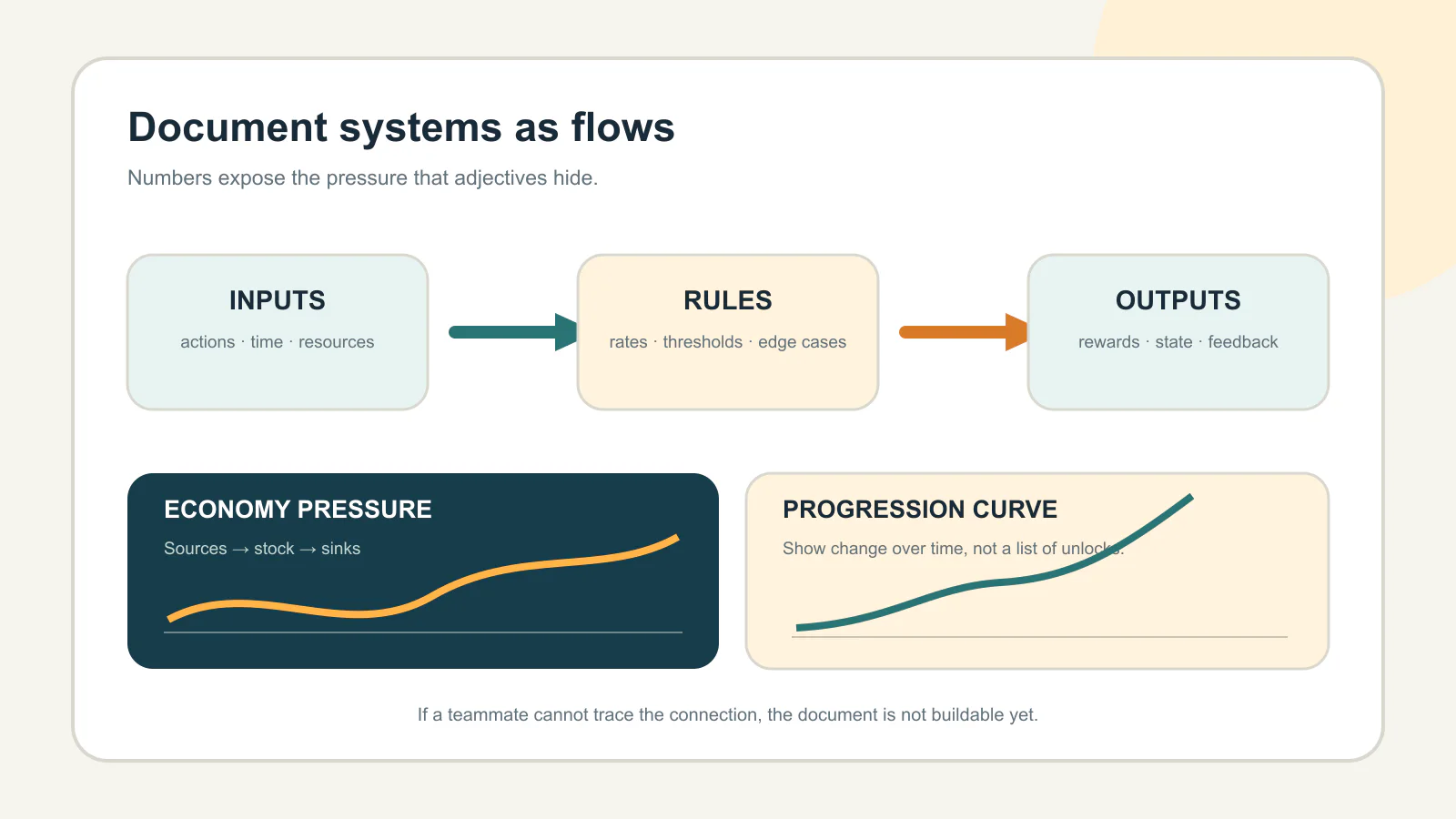
- Progression and Economy. How players grow, what they spend, and how difficulty and reward scale over a session and a full playthrough.
- Art and Audio Direction. Mood, references, and constraints. Enough to align an artist, not enough to design their whole style guide.
- Scope and Milestones. What ships in the vertical slice, the demo, and version 1.0. Scope written down is scope you can defend.
Here is how those seven map to the questions they answer:
| Section | Question it settles |
|---|---|
| High Concept | What game are we even making? |
| Core Loop | What does the player do over and over? |
| Pillars | Which feature wins when two collide? |
| Mechanics and Systems | What are the actual rules? |
| Progression and Economy | How does the player grow and spend? |
| Art and Audio Direction | What should it look and sound like? |
| Scope and Milestones | What ships, and by when? |
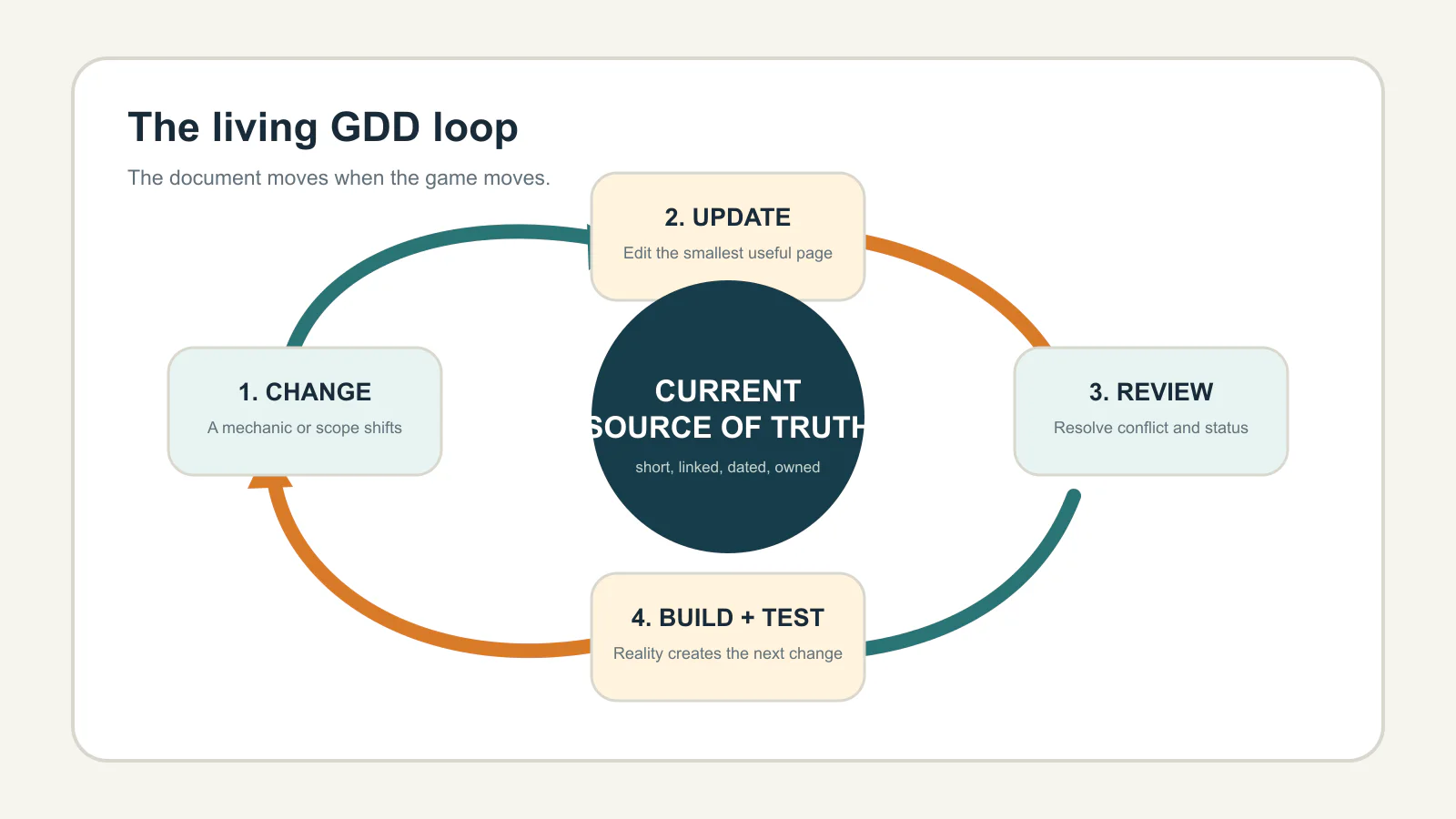
Notice that every row ties to a decision. If a section in your draft does not map to a question someone will ask, it is a candidate for the cut list below.
The Three Sections You Can Usually Cut
Not every conventional heading deserves the space. These three routinely appear in templates yet rarely change a single decision on a small team.
- The exhaustive backstory dump. A ten-page lore appendix feels productive, but players meet your world through gameplay, not through a document. Capture the tone and the three facts that affect mechanics, then move the novel to a separate wiki page.
- The full monetization plan (too early). For a prototype or unfunded project, a detailed store and pricing model is a guess dressed as a plan. Note the intended model in one line and revisit it when you have a playable build and real data.
- The speculative marketing section. Launch trailers, influencer lists, and press strategy belong in a marketing plan, not the design doc. Mixing them in dilutes the file and dates it quickly.
Cutting these is not about being lazy. It is about keeping the document honest. Every section you keep is a promise to maintain it, and a promise you cannot keep becomes noise. Studios building ambitious projects, from cozy sims to sci-fi survival titles like MECH Stranded, tend to keep their living docs lean and push the rest into linked references.
Make the Doc Match the Team
A solo developer needs less structure than a fifteen-person studio. Scale the seven core sections up or down, but do not skip them. The cut list, by contrast, only grows as your team shrinks. When in doubt, ask whether the next contributor will read a section to make a decision. If the answer is no, it does not belong in the main document.
FAQ
How long should each section be? As long as it needs to be and no longer. Core Loop might be two paragraphs; Mechanics might be several pages. Length should follow decision density, not a template quota.
Should I ever include the cut sections? Yes, once they matter. A funded studio near launch absolutely needs a monetization plan. Just keep it in its own document so the design doc stays focused.
What if my publisher wants the extra sections? Give them what they ask for in a pitch or business appendix, and keep your working design doc separate. Two audiences, two documents.
Key Takeaway
A useful GDD is defined by what you leave out. Keep the seven sections that drive decisions and cut the three that only pad page count.
Sources: Wayline, Nuclino, Game Design Skills
gddtemplatesgame designdocumentationindie dev