Living Design Docs: Keeping Your GDD Alive Past Month One
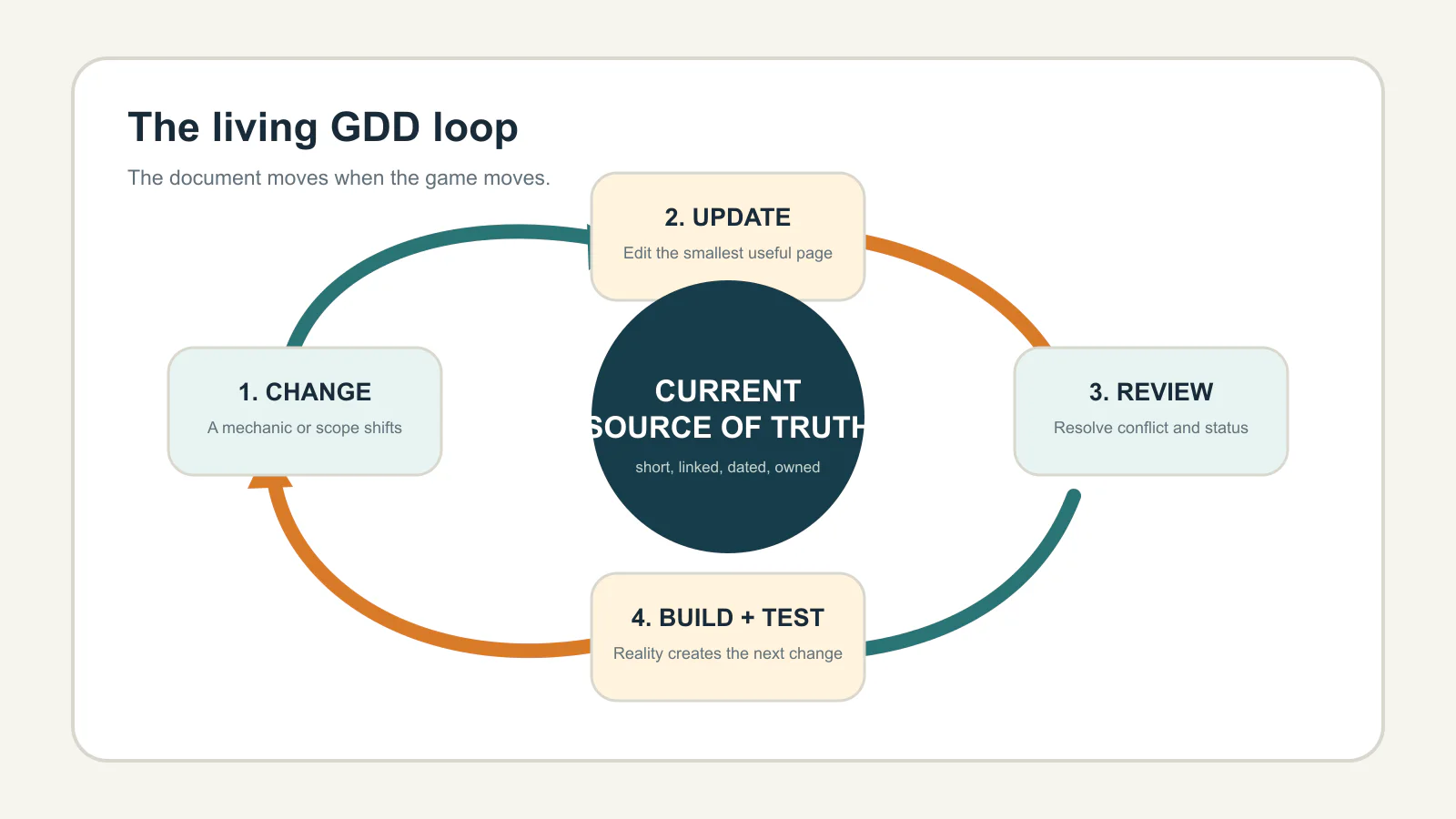
Image: Game Design Document
Almost every game design document dies the same quiet death. Someone writes it in a burst of early enthusiasm, the team reads it once, and then the game changes. A mechanic gets cut, an economy gets rebalanced, and the document keeps insisting on the old plan. Within a month it is not just outdated, it is actively misleading, and people stop trusting it entirely. From there it becomes a graveyard file nobody opens.
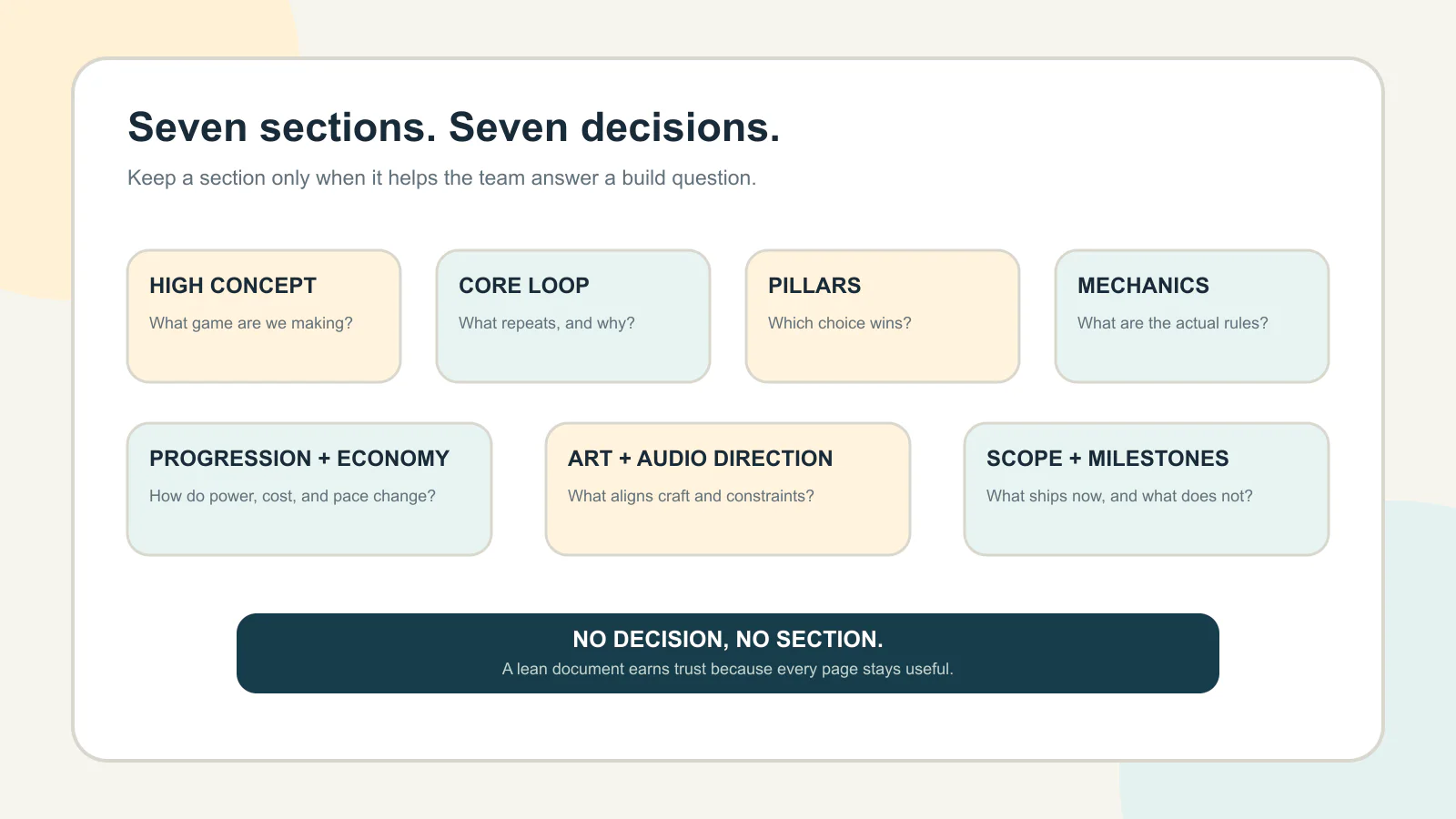
The fix is not more discipline about updating a giant document. It is designing the document so that staying current is cheap. That is what people mean by a living design doc, and in 2026 the practice has shifted decisively toward lean, modular, wiki-style docs over the old 200-page bible.
Why Big Docs Die
The core problem is friction. A single monolithic file makes every update feel heavy, so updates do not happen. Understanding the failure modes tells you exactly what to design around.
- Edit friction. Changing one rule means scrolling through a huge file, and no one wants to. So the change happens in the game and never in the doc.
- Single ownership. When one person “owns” the document, everyone else treats it as read-only, and it decays the moment that person gets busy.
- No link to reality. If nothing in your workflow forces the doc to reflect the current build, drift is guaranteed.
- Fear of the mess. Once a doc is visibly stale, contributors assume the whole thing is wrong and stop reading, which accelerates the rot.
Every one of these is a structural problem, not a willpower problem. You cannot nag a team into maintaining a document that is painful to maintain.
Building a Doc That Survives
A living GDD is small, split into pieces, and edited by whoever changes the design. Here is the shape that holds up through production.
- Go modular. Break the doc into short linked pages, one system per page. A wiki or a tool with internal links beats a single scrolling file. Editing the combat page never touches the economy page.
- Keep pages short. A page that fits on one screen invites edits. A page that runs for miles invites avoidance.
- Let the team edit. Anyone who changes a mechanic updates its page. The designer curates and resolves conflicts, but ownership is shared. Trust follows participation.
- Date and status your pages. A small “last updated” line and a status tag (draft, in build, shipped) tells readers instantly whether to trust a page.
- Tie updates to your rhythm. Fold doc updates into sprint reviews or milestone check-ins so the doc moves when the game moves.
The table below contrasts the two approaches at a glance.
| Trait | Dead bible | Living doc |
|---|---|---|
| Structure | One huge file | Many short linked pages |
| Ownership | Single author | Whole team |
| Update cost | High | Low |
| Trust over time | Falls | Holds |
| Best fit | Never, really | Prototype to launch |
The Mindset Shift
Stop treating the GDD as something you finish. A living document is never done, and that is the point. It is a shared source of truth that changes as the game changes, which means a slightly messy but current doc beats a polished but stale one every time. Teams building long-running projects, whether a cozy sim or a sci-fi survival game, keep the doc breathing by making the smallest useful edit the easy default.
Tools Help, Habits Matter More
Wiki-style tools remove edit friction, and that helps. But the tool is not the fix. A team that updates a plain shared folder after every sprint will beat a team with the fanciest documentation platform and no habit of using it. Pick something with easy internal links, then build the habit of editing in the same breath as changing the game.
FAQ
How often should I update the doc? Whenever the design changes, in the same work session. Batching updates for “later” is how docs die. Small, frequent edits keep friction near zero.
Won’t shared editing create chaos? A little, and that is fine. Version history and a designer who curates keep it manageable. The alternative, a pristine document no one trusts, is far worse.
Is a full formal doc ever worth it? For a pitch, a publisher deliverable, or a compliance need, yes. Keep that as an export or a snapshot. Your day-to-day working doc should stay lean and living.
Key Takeaway
A GDD stays alive when it is small, modular, and edited by the team. Treat it as a shared source of truth, not a launch-day artifact.
Sources: Wayline, Whale Brain Design, MCV/DEVELOP
gddliving documentleandocumentationprocess